10Mar
2026
Russian Federation
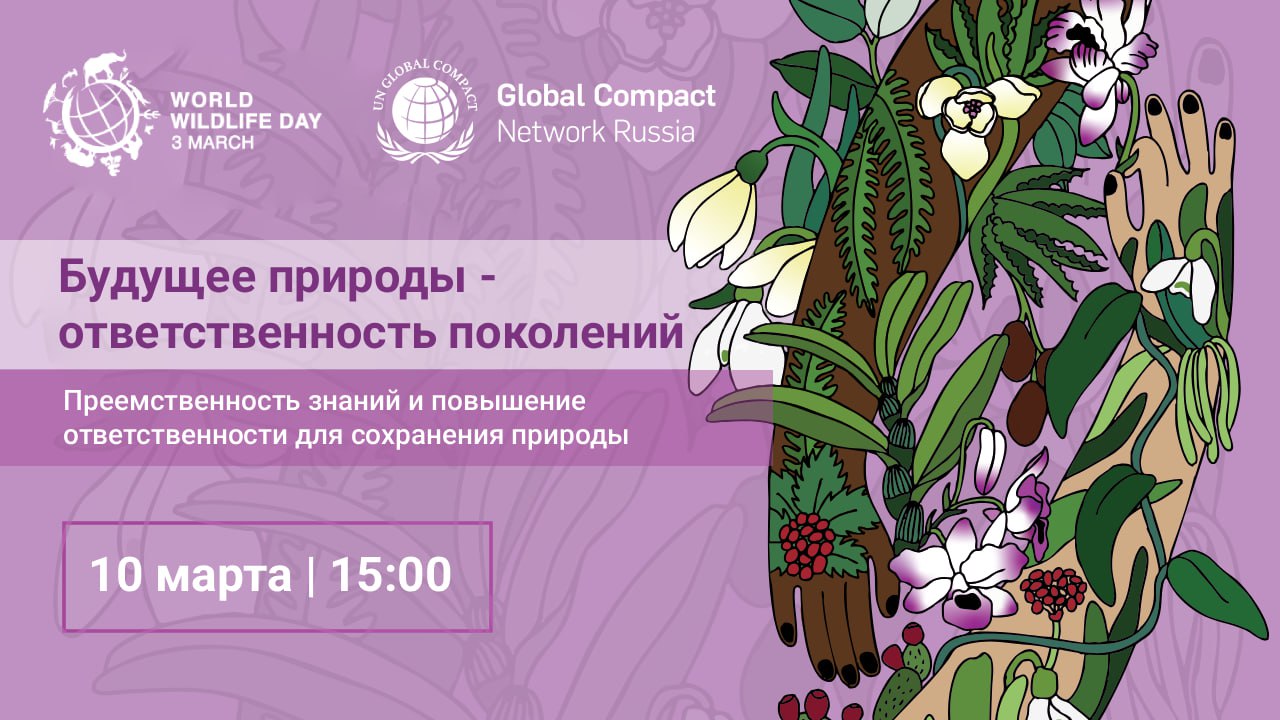
The future of nature is the responsibility of generations
UN Global Compact Network Russia
The National Network of the UN Global Compact in Russia invites everyone interested in preserving a healthy environment to join our event dedicated to ...
City
Moscow
Street address
9 Tverskaya street
The National Network of the UN Global Compact in Russia invites everyone interested in preserving a healthy environment to join our event dedicated to World Wildlife Day.
We will discuss the importance of conscious and responsible attitudes toward the environment, the role of raising awareness about various aspects of ecosystem conservation and restoration—within which wildlife plays a crucial role—and present unique examples of human contributions to the protection of animals, plants, and natural wildlife sites.
Special attention will be given to the 2026 theme, “Medicinal and Aromatic Plants: Sustaining Health, Heritage and Livelihoods,” in order to increase knowledge about this potential of wildlife and its role in human health and in the cultural traditions of local communities, as well as to highlight the risks of losing such plants under climate change conditions.
The event will take place on March 10 at 15:00 (Moscow time) online in an open discussion format.
World Wildlife Day provides an opportunity to draw attention to the intrinsic value of wildlife, the diversity and beauty of wild fauna and flora, and to better understand the benefits that nature provides to humanity. It also promotes greater awareness of human responsibility toward nature. Wildlife is a source of ecosystem balance and biodiversity preservation, and at the same time a resource upon which human well-being depends—from food and fuel to clean air and water, medicines, shelter, and jobs.
To ensure well-being for present and future generations, it is essential to increase awareness of the role of responsible and sustainable use of natural resources in all areas of life, as well as to disseminate knowledge about wildlife and examples of conservation efforts.
Particular focus will be placed on the 2026 theme “Medicinal and Aromatic Plants: Sustaining Health, Heritage and Livelihoods,” aiming to enhance understanding of the importance of medicinal and aromatic plants for human health, ecological balance, and cultural traditions of local communities, as well as to highlight the risks of their loss due to climate change.
Today, 9% of plant species used worldwide for medicinal and aromatic purposes are threatened with extinction due to overharvesting, habitat loss, climate change, and illegal trade. Up to 70,000 species of medicinal and aromatic plants are used globally, forming the foundation of many healthcare systems and remaining vital for modern pharmaceuticals. Beyond medical applications, wild plant resources are used across various industries and play a crucial role in maintaining ecosystems by stabilizing soils and supporting biodiversity. The event will also address the challenges faced by Indigenous peoples in maintaining their traditional ways of life.
Overall, the event aims to foster knowledge continuity and strengthen responsibility for nature conservation through a tripartite dialogue among government, business, and civil society, with the participation of youth, experienced experts, and representatives of corporate and public sectors involved in environmental decision-making.
We will discuss the importance of conscious and responsible attitudes toward the environment, the role of raising awareness about various aspects of ecosystem conservation and restoration—within which wildlife plays a crucial role—and present unique examples of human contributions to the protection of animals, plants, and natural wildlife sites.
Special attention will be given to the 2026 theme, “Medicinal and Aromatic Plants: Sustaining Health, Heritage and Livelihoods,” in order to increase knowledge about this potential of wildlife and its role in human health and in the cultural traditions of local communities, as well as to highlight the risks of losing such plants under climate change conditions.
The event will take place on March 10 at 15:00 (Moscow time) online in an open discussion format.
World Wildlife Day provides an opportunity to draw attention to the intrinsic value of wildlife, the diversity and beauty of wild fauna and flora, and to better understand the benefits that nature provides to humanity. It also promotes greater awareness of human responsibility toward nature. Wildlife is a source of ecosystem balance and biodiversity preservation, and at the same time a resource upon which human well-being depends—from food and fuel to clean air and water, medicines, shelter, and jobs.
To ensure well-being for present and future generations, it is essential to increase awareness of the role of responsible and sustainable use of natural resources in all areas of life, as well as to disseminate knowledge about wildlife and examples of conservation efforts.
Particular focus will be placed on the 2026 theme “Medicinal and Aromatic Plants: Sustaining Health, Heritage and Livelihoods,” aiming to enhance understanding of the importance of medicinal and aromatic plants for human health, ecological balance, and cultural traditions of local communities, as well as to highlight the risks of their loss due to climate change.
Today, 9% of plant species used worldwide for medicinal and aromatic purposes are threatened with extinction due to overharvesting, habitat loss, climate change, and illegal trade. Up to 70,000 species of medicinal and aromatic plants are used globally, forming the foundation of many healthcare systems and remaining vital for modern pharmaceuticals. Beyond medical applications, wild plant resources are used across various industries and play a crucial role in maintaining ecosystems by stabilizing soils and supporting biodiversity. The event will also address the challenges faced by Indigenous peoples in maintaining their traditional ways of life.
Overall, the event aims to foster knowledge continuity and strengthen responsibility for nature conservation through a tripartite dialogue among government, business, and civil society, with the participation of youth, experienced experts, and representatives of corporate and public sectors involved in environmental decision-making.